
Introduction: Old-World Charm Meets Modern Needs
Stately Tudors on tree-lined streets. Prairie-style gems by the lake. Highland Park’s architectural tapestry is a daily reminder that history lives in brick and beam. But growing families and 21st-century lifestyles still need mudrooms, bigger kitchens, and remote-work sanctuaries. A thoughtful home addition can deliver that extra square footage—if you respect the character that makes these houses special. Below, we map out the design principles, budget realities, and contractor insights required to create an addition that feels original, not tacked on.
1. Understand the Local Rules Before You Sketch
Highland Park’s Preservation Commission safeguards hundreds of landmarked structures and neighborhood districts. Even if your property isn’t formally landmarked, zoning ordinances dictate height limits, rear-yard setbacks, and lot-coverage maximums. Submit preliminary home addition design drawings for early feedback; it can slash months off your schedule and prevent costly redrafts.
2. Choose the Right Partners: Historic Home Contractor vs. Volume Builder
A seasoned historic home contractor lives and breathes context—matching brick blends, replicating corbel details, and sourcing period-appropriate hardware. A volume builder may get the square footage up faster, but details can feel cookie-cutter.
Evaluation Point
Historic Specialist
Volume Builder
Brick/color match
✔ Expert masonry sourcing
▲ Stock blends only
Familiarity with Preservation Commission
✔ Always
▲ Rare
Upfront cost
▲ Higher bid
✔ Lower bid
Final curb appeal
✔ Seamless
▲ “Afterthought” risk
Pro tip: Aim for a blend—a home addition contractor with historic chops and the project-management rigor of a production firm.
3. Design Guideline #1: Let the Original House Lead the Conversation
- Mass & Scale – Step back the new volume by 12–18 inches and lower the ridge line, so the addition reads as secondary.
- Roof Form – Gable or hipped rooflines should echo, not copy, the primary form. On a Prairie school home, a low-slope shed roof may feel more honest.
- Fenestration Rhythm – Match window proportions (height-to-width ratios) and align sills with existing courses of brick or stone.
- Datum Lines – Continue water-table courses, belt courses, or stucco score lines to visually stitch old and new.
These moves satisfy the Preservation Commission and make the finished product look like it grew there naturally.
4. Design Guideline #2: Modern Function Happens Inside the Envelope
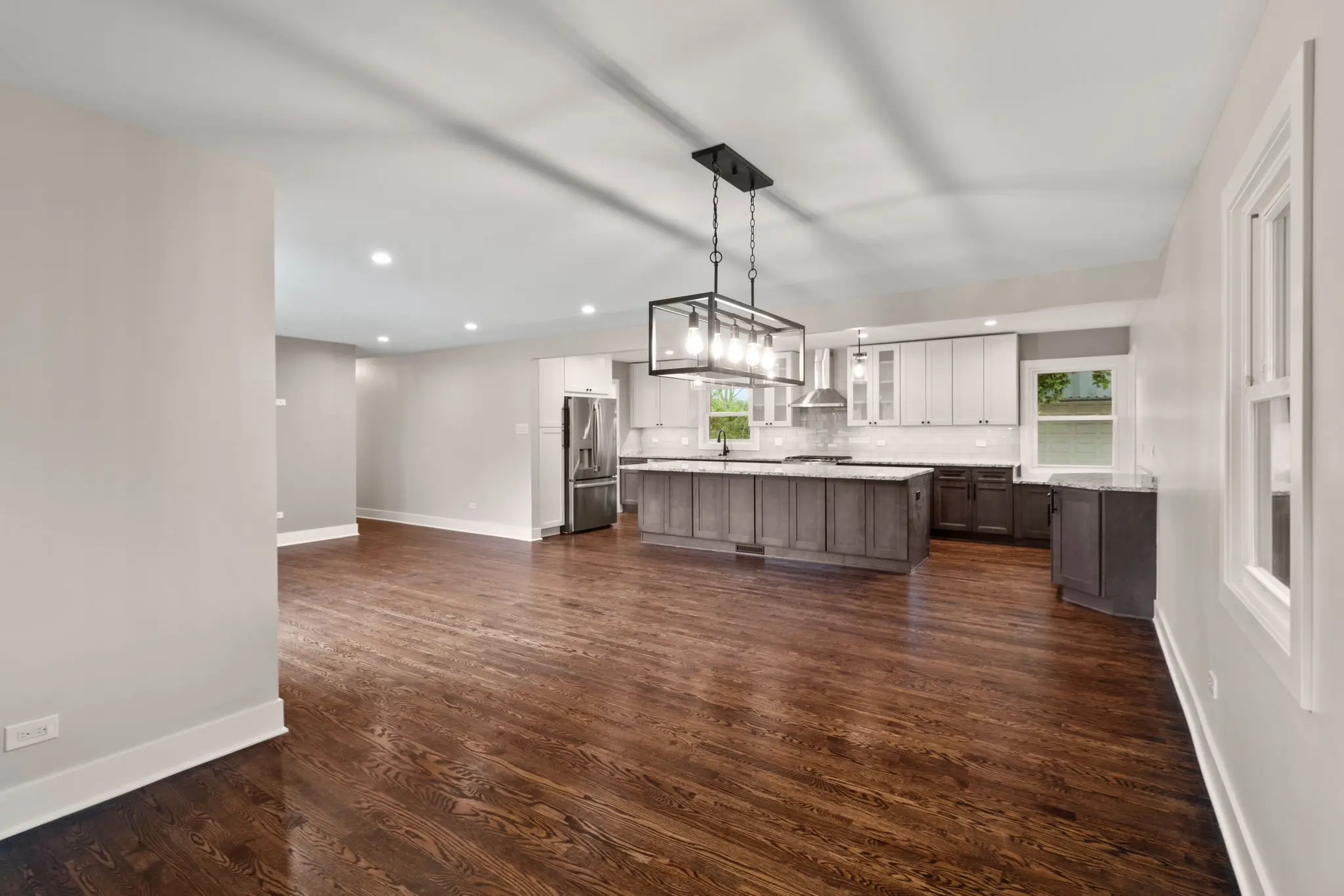
While the exterior honors 1905, the interior can indulge in open-concept layouts, radiant floor heat, or a glassy breakfast nook. Use thoughtful transitions:
- Pocket doors trimmed to match original millwork create flexible flow.
- A two-step drop from historic floor joists into the new family room subtly delineates eras.
- Expose a salvaged timber beam at the junction point as both structural tie-in and visual storytelling.
5. Budget Reality Check: Home Addition Cost in Highland Park
Scope
Typical Range (2025 $)
Cost Drivers
Single-Story Rear Addition (kitchen + mudroom, 350 sq ft)
$140 K–$230 K
Brick match, custom cabinetry
Two-Story Addition (primary suite + family room, 1000 sq ft)
$310 K–$480 K
Foundation depth, extra HVAC zone
Garage with Bonus Room
$220 K–$350 K
Dormers, fire separation
Rule of Thumb: Plan 15 % for contingencies—balloon framing surprises, knob-and-tube rewiring, or asbestos in 1920s floor tiles can surface mid-demo.
Remember to distinguish “home addition cost” (construction only) from furnishings, landscaping, and permit fees.
6. Financing & ROI in a Landmark Market
Historic homes in Highland Park enjoy strong resale premiums, and a tasteful addition can amplify value. Banks often appraise using “Cost + Value” because comparable square footage is scarce. Popular finance routes include the following:
- Cash-out refinance – take advantage of low rates, amortize over 30 years.
- Home equity line (HELOC) – flexible draw schedule for phased projects.
- Renovation loan – combines purchase price and renovation into one package for new buyers of fixer-uppers.
Expect an ROI of 55–70 % within five years for kitchen-centric expansions; numbers improve when additions solve functional deal-breakers like laundry relocation or primary-suite deficits.
7. Construction Sequencing: Keeping Old-Growth Trim Safe
A home addition contractor versed in historic work will:
- Install temporary polycarbonate vestibules to shield plaster walls from Chicago-area freeze-thaw.
- Use low-impact helical piles where root zones of century-old oaks restrict excavation.
- Salvage original clapboards removed for tie-ins, then weave them back into unobtrusive areas.
Daily broom sweeps, negative-pressure fans, and HEPA vacuums protect fragile plaster medallions and your family’s lungs.
8. Green Building, Vintage Aesthetic
You can hit blower-door targets and keep divided-lite windows:
- Sash-pack inserts with insulated glass upgrade R-value without trashing original casings.
- Closed-cell spray foam in new walls pairs with dense-pack cellulose in existing cavities to balance vapor permeability.
- Heat-pump mini-splits serve the addition while isolating ductwork from century-old joists.
Ask your Highland Park general contractor to model energy performance so utility savings offset part of the cost of home addition over time.
9. Final Checklist Before You Break Ground
- Confirm zoning setbacks in writing.
- Photograph every façade for return-to-original reference.
- Lock finish specs—changing brick mid-order delays everything.
- Protect neighboring roots with tree-protection fencing.
- Schedule Preservation Commission site visit at framing stage for real-time tweaks.
Conclusion: Honor Yesterday, Live Better Today
Adding on to a Highland Park treasure doesn’t mean sacrificing its soul. With meticulous home addition design, partnership with a qualified historic home contractor, and a clear grasp of home addition cost, you can achieve fresh functionality that feels like it’s been there all along.
Ready to explore possibilities? Reach out to Moller Builders, your trusted general contractor in Highland Park, IL, to discuss concepts, budgets, and timelines—and keep your historic gem shining for the next century.